Watch This Space!
Brisbane recently hosted the “Low Carb Brisbane 2025” event, where Nina Teicholz, an American investigative science journalist known for examining the political, institutional, and industry influences that hinder progress in nutrition and science, was interviewed.
She discusses how Robert F. Kennedy Jr., Head of the U.S. Health Department is leading a campaign to “Make America Healthy Again,” which includes a review and likely overhaul of the U.S. Dietary Guidelines later this year. The current guidelines, including the well-known “Food Pyramid”, are based on research from over 45 years ago. They are outdated and clearly not working.
Australia followed the U.S. lead in the 1980’s and adopted similar low-fat/high-carbohydrate dietary guidelines, which also remain largely unchanged - despite our growing obesity and diabetes epidemics and a population that’s becoming increasingly unwell.
This is particularly significant because these guidelines shape the advice given by doctors, dietitians, nutritionists, schools, hospitals, aged care facilities, and even influence the military.
If the U.S. updates its dietary guidelines, Australia and other nations will likely follow suit. And frankly, it’s about time, the outdated Food Pyramid needs to be turned on its head.
Part of this shift will involve challenging long-held beliefs about dietary fat. A major focus will be the reassessment of saturated fats, as numerous systematic reviews and meta-analyses have consistently concluded that saturated fat intake has no significant effect on cardiovascular or total mortality. For decades, saturated fats and red meat have been unfairly vilified, largely due to outdated and flawed research.
Over the past decade, a growing body of evidence has prompted a rethinking of these assumptions. Now, officials are finally acknowledging the mistakes made 45 years ago and meaningful change in dietary policy appears to be on the horizon.
Protein has also been unfairly vilified, but growing awareness is changing that. Many people are now recognising just how vital protein is for overall health – particularly for middle-aged women who are struggling with issues such as autoimmune conditions, inflammatory bowel disease, vertigo, chronic fatigue, skin problems, obesity, diabetes, and poor mental health. For many, increasing protein (specifically red meat) intake is proving to be a key factor in restoring energy, improving body composition, and supporting recovery from long-term health challenges.
There’s also growing awareness in the U.S. around seed and vegetable oils, which may soon be reconsidered in the Dietary Guidelines due to their oxidative and inflammatory effects in the body. However, there’s significant tension around this issue as the seed oil industry is understandably panicking and is likely to invest heavily in maintaining the perception that these oils are “safe” and keeping them included in official recommendations.
Ironically, many people use these oils believing they reduce the risk of cardiovascular disease, when in fact, evidence increasingly suggests they may contribute to it.
I’ve attached the podcast interview here if you’d like to learn more.
I’m really looking forward to seeing the new U.S. Dietary Guidelines - and to finding out how long it takes Australia to follow suit! It’ll certainly make my job as a nutritionist a whole lot easier!
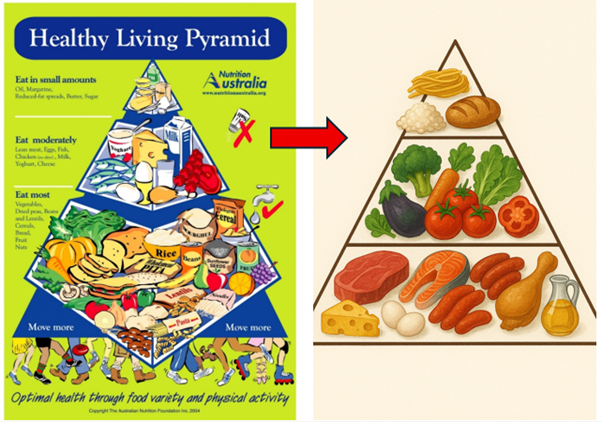
Change the Pyramid!!